Indoor footwear can feel very different as you move from a carpeted bedroom to a tiled kitchen or hallway. Carpet can feel softer underfoot, while tile is hard and can become slippery when wet. A pair that feels comfortable in one room may catch on thick carpet or feel less stable on a smooth floor.
Choosing footwear for a home with mixed flooring involves more than selecting a soft lining or a thick sole. Grip, flexibility, fit, cushioning and ease of cleaning all affect how useful the pair will be during everyday movement.
It is also important to distinguish between footwear designed for relaxed indoor use and footwear intended for outdoor surfaces. The right choice depends on the home’s layout, how much time you spend walking, and the activities you’ll use the footwear for.
Why Does Mixed Flooring Change the Choice of Slippers?
Different surfaces interact with footwear differently. Tile and polished stone are firm and provide little cushioning, so a very thin sole may feel uncomfortable during prolonged standing. Smooth floors can also become hazardous when wet or contaminated with cleaning products.
Carpet provides more friction in many situations, but its pile can affect how the sole moves. Deep or thick carpet may catch the edge of a flexible sole, while very soft carpet can compress underfoot. These changes can make certain slippers feel less stable.
Some homes also have rugs, laminate, wooden flooring or thresholds between rooms. The transition between surfaces can matter as much as the surfaces themselves, particularly if the footwear is loose or has a bulky edge.
For this reason, a good indoor pair should feel secure on the surfaces where it will be used most often. It should offer reasonable cushioning without being so thick or unstable that walking becomes awkward.
Which Sole Materials Are Worth Considering?
Indoor footwear uses a range of sole materials, including rubber, foam and textile-based surfaces. Each has different characteristics, and performance depends on the design rather than the material name alone.
Rubber soles can provide traction when the tread and compound suit the surface. However, a smooth rubber sole isn’t automatically slip-resistant, and you shouldn’t assume an ordinary slipper is safe on every wet floor.
Foam soles can feel lightweight and cushioned. Some compress more readily under body weight, while others feel firmer. Sole shape and thickness affect how it bends and how stable it feels in motion.
Textile soles may feel quiet and flexible on carpet, but they may not grip smooth tile as well. They can also be more difficult to clean if they absorb moisture or collect dirt.
Inspect the complete underside of the footwear. Look for consistent tread, secure construction, and a shape that won’t catch on carpet edges. If possible, test the pair on a clean, dry surface like your home flooring.
How Much Cushioning Do You Need?
Cushioning can make hard floors feel more comfortable, especially if you spend a lot of time standing in the kitchen or walking between rooms. However, a very soft sole may compress unevenly, making the footwear feel less stable.
A thin sole may offer little protection from hard tile, while a thick, bulky base may feel awkward on stairs or deep carpet. The goal is to balance cushioning and control.
When trying on slippers, stand with your weight distributed across both feet. Notice whether the heel sinks excessively, whether the forefoot feels supported and whether the sole bends naturally as you walk.
Cushioning is also a personal preference. Someone who uses slippers for brief trips around the home may prefer a lightweight design, while someone who wears them for longer periods may value a more substantial footbed.
If you have persistent foot pain or a specific medical concern, general slipper guidance may not be enough. A qualified healthcare professional can help determine which type of footwear best fits your needs.
Should You Choose Open or Closed Slippers?
Open-toe designs allow more airflow and can feel comfortable in warm weather. They are easy to put on and take off, which may be useful for short trips around the home. However, an open design offers less toe protection and may let the foot slide forward if the fit is poor.
Closed-toe slippers offer more coverage and can feel more secure when the upper fits comfortably. They may be useful in cooler rooms, although thick linings can feel warm if the feet tend to sweat.
The shape alone does not determine stability. A closed-toe slipper can still be loose, and an open design can fit securely if its straps and footbed suit the wearer. Check whether the foot remains in position while walking and whether the upper rubs against the skin.
Think about the household routine. If you use the footwear for short indoor trips, ease of use may matter. If it is worn for several hours, fit, breathability and cushioning deserve closer attention.
Are Flip-Flops a Practical Choice Indoors?
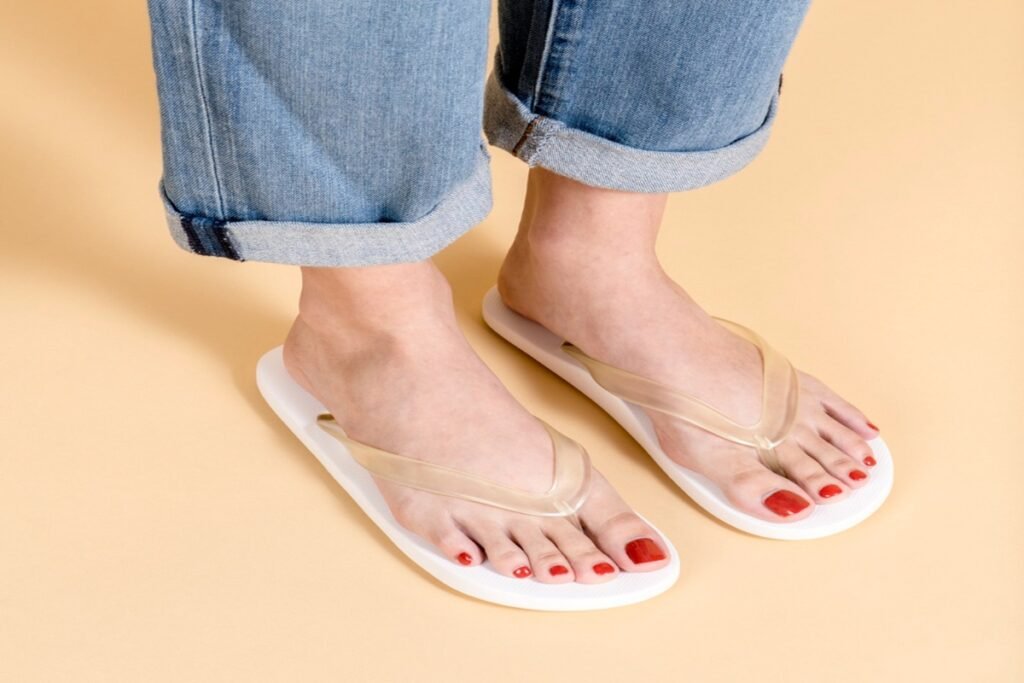
Some people prefer men’s flip flops because they are lightweight and easy to slip on. They may suit brief, casual use in appropriate indoor conditions, but they aren’t ideal for every household task.
The toe-post design relies on the strap keeping the foot in place. If the fit is loose, the wearer may grip with the toes to keep the footwear in place. This can feel tiring or awkward over longer periods.
The sole also matters. A very flat, smooth base may offer limited cushioning on hard floors, while worn tread can reduce traction. Wet tiles are particularly hazardous, so don’t treat flip flops as a guarantee against slipping.
For frequent indoor walking, a more secure upper may feel more practical. If you choose an open style, check that it stays in place during normal movement and is suitable for the surfaces on which it will be worn.
What Should You Check About Fit?
A slipper should feel secure without squeezing the foot. Your toes should have enough room, and your heel shouldn’t move excessively with each step. If your foot slides forward or sideways, the size or shape may not be right.
Don’t choose a larger size just because it feels easier to put on. Too much space can make your foot move around inside the slipper, increasing the chance of catching an edge or losing stability. choose a larger size just because it feels easier to put on. Too much space can make your foot move around inside the slipper, increasing the chance of catching an edge or losing stability. choose a larger size just because it feels easier to put on. Too much space can make your foot move around inside the slipper, increasing the chance of catching an edge or losing stability.
Check the inside for rough seams, stiff edges or areas that may rub against the skin. If the footwear has an adjustable strap, make sure it fits comfortably and stays secure during use.
When comparing men’s slippers in Kuwait, consider the climate and indoor environment. Breathable materials may be preferable in warm conditions, while a more enclosed design may suit cooler or heavily air-conditioned rooms.
How Can You Test Slippers on Both Carpet and Tile?
If possible, try the footwear on a clean, dry surface before committing to regular use. Walk at a normal pace on tile and carpet, then turn gently and change direction. Notice whether the sole catches on carpet or feels slippery on hard floors.
Do not deliberately test grip on wet tiles or by walking quickly. Water and cleaning residue can make any surface hazardous. Clean up spills promptly and take extra care around bathrooms and kitchens.
Pay attention to the transitions between rooms. A thick sole or raised edge may catch on a rug or threshold if the design is bulky. A flexible sole may move more naturally, but excessive flexibility can also affect stability depending on the construction.
If the slippers feel insecure or make you change how you walk, consider another design. Comfort should not depend on constantly adjusting your steps to keep the footwear in place.
How Should You Maintain Indoor Footwear?
Slippers can collect dust, hair, sweat and moisture even when they are worn only indoors. Let them air out after use, then clean them according to the material’s care instructions.
Remove loose debris from the underside so it doesn’t transfer onto carpet or create uneven contact with the floor. Check the tread for worn areas and inspect the sole-to-upper connection for separation.
Avoid using excessive heat to dry wet footwear. High temperatures can affect some foams, synthetic materials, and adhesives. Let the pair dry naturally in a ventilated place.
It also makes sense to keep indoor footwear separate from outdoor shoes. Outdoor soles can carry grit and dirt into the home, while indoor slippers may not be built for pavement.
How Can You Choose a Pair for Everyday Use?
Start with the surfaces on which you spend the most time. Look for enough cushioning for hard floors, a sole that moves comfortably on carpet and a fit that keeps the foot secure. Consider whether you prefer an open or closed design and how long you expect to wear them.
Check the construction, tread, cleaning instructions, and signs of quality before you buy. A soft lining alone doesn’t guarantee comfort, and a thick sole doesn’t automatically mean better stability.
A practical pair should feel natural during everyday movement and work on different floor surfaces at home. By considering fit, grip, cushioning, and maintenance together, you can choose indoor footwear that fits your routine rather than creating new problems as you move from room to room.