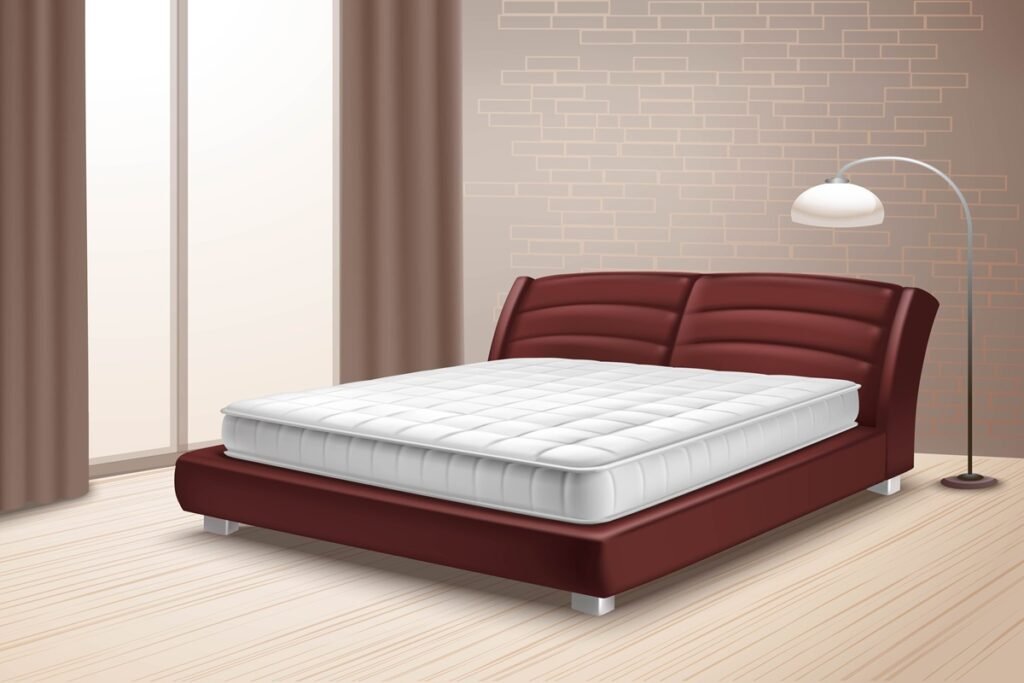
You spend a third of your day in bed, so the mattress beneath you deserves more thought than simply choosing the softest one in the showroom. A mattress can look comfortable, yet feel too warm, too firm or unsupportive after a few hours of sleep. This is one reason latex mattresses have become a popular choice among people looking for a balance between comfort and support.
A latex mattress is made from latex, a naturally elastic material that responds to body weight without letting you sink too deeply into the surface. Depending on its construction, it can offer a springy feel, good pressure relief and useful support for different sleeping positions.
If you are considering a latex mattress in India shoppers can choose from several constructions and firmness levels. Understanding these differences can make it easier to find one that suits your body, sleeping style and room conditions.
What Is a Latex Mattress?
Latex is a flexible material produced from rubber tree sap or manufactured synthetically. In mattresses, it is used as a supportive comfort layer or as the main material throughout.
Unlike memory foam, which slowly moulds around the body, latex responds more quickly when you change position. It has a gentle bounce and tends to keep the sleeper closer to the surface.
The overall feel depends on factors such as the type of latex, its density, the number of layers and the firmness selected. Some latex mattresses feel plush, while others have a noticeably firmer and more supportive surface.
Types of Latex Mattresses
Not every latex mattress is made in the same way. Before buying one, it helps to understand the main types available.
Natural Latex Mattress
Natural latex is made primarily from latex obtained from rubber trees. It is valued for its elasticity, durability and responsive feel.
People who prefer more natural materials often consider this type. However, the term natural latex can cover different formulations, so it is sensible to check how much of the mattress is natural latex rather than relying only on the product description.
Synthetic Latex Mattress
Synthetic latex is produced using manufactured materials designed to replicate some of the properties of natural latex. It can offer a similar responsive feel and is available at a lower price than mattresses made from natural latex.
Performance can vary depending on the formulation and construction, so it is worth checking the specifications before deciding.
Latex Hybrid Mattress
A latex hybrid combines a latex comfort layer with another support system, commonly individually wrapped springs. This construction can provide the buoyant feel of latex along with the responsive support of springs.
A hybrid can be worth considering if you prefer a mattress with more bounce and stronger edge support. Its construction may also allow better airflow through the spring section.
Latex Foam Mattress
A latex foam mattress uses latex foam as the primary cushioning and support material. It can provide a more consistent feel across the sleeping surface and is often chosen by people who want latex’s characteristic responsiveness without a spring system.
Benefits of a Latex Mattress
Latex appeals because it combines comfort with responsiveness. Here are some of its main advantages.
Good Pressure Relief
Latex distributes body weight across the mattress instead of allowing pressure to concentrate heavily around areas such as the shoulders and hips. This can make it comfortable for side sleepers, particularly when the firmness is chosen correctly.
A softer latex layer offers more cushioning, while a firmer construction provides stronger resistance.
Responsive Support
Latex has a naturally springy quality. When you move, the mattress responds quickly rather than leaving you feeling stuck in the material.
This can be particularly useful for people who change sleeping positions during the night. It also makes getting in and out of bed easier compared with some deeply contouring foam mattresses.
Better Airflow
Latex foam is more breathable than dense conventional foam, especially when the mattress has a ventilated structure. Many latex mattresses also use pinhole patterns or other designs that encourage air movement through the material.
This can be useful in India’s warmer and more humid regions, where sleeping on a mattress that traps considerable heat can become uncomfortable.
Durable Construction
Quality latex is known for its resilience. It tends to recover its shape after repeated use and can resist permanent impressions better than some softer foam materials.
However, durability depends on the quality of the latex, mattress construction, usage and maintenance. A latex mattress is not automatically long lasting simply because it contains latex.
Reduced Motion Transfer
Latex can absorb a reasonable amount of movement across the sleeping surface. This can help couples when one person moves or gets out of bed while the other is sleeping.
It may not eliminate movement, particularly in a highly responsive latex mattress, but the right construction can offer a good balance between bounce and motion control.
Suitable for Different Sleeping Positions
Latex mattresses are available in different firmness levels, making them suitable for back, side and combination sleepers.
Side sleepers often need enough cushioning around the shoulders and hips. Back sleepers usually benefit from balanced support that keeps the body comfortably aligned. Combination sleepers may prefer medium firmness because it offers both cushioning and ease of movement.
What to Consider Before Buying
Choosing a latex mattress is not simply about deciding whether latex is good. The mattress should match the person sleeping on it.
Consider Your Sleeping Position
Your sleeping position should be one of the first things you consider.
If you mostly sleep on your side, a very firm mattress may create uncomfortable pressure around the shoulders and hips. A softer or medium-firm option may be more suitable.
Back sleepers usually need enough firmness to support the midsection without creating excessive pressure.
If you sleep in several positions, medium firmness is often a practical starting point because it balances cushioning and support.
Pay Attention to Your Body Weight
Body weight affects how deeply you compress a mattress. A mattress that feels firm to one person may feel softer to another.
Lighter sleepers may not compress a firm latex mattress very much, while heavier sleepers may experience greater sinkage. Consider your weight and preferred sleeping position rather than choosing firmness based solely on a label.
Check the Latex Composition
If natural materials are important to you, look closely at the composition. A mattress described simply as latex may contain natural latex, synthetic latex or a blend.
Also check whether latex is used throughout the mattress or only in one comfort layer. The construction can significantly influence how the mattress feels and performs.
Think About Firmness
Firmness is highly subjective. Two mattresses labelled medium firm can feel different because of differences in latex density, layer thickness and overall construction.
Whenever possible, test the mattress before buying or check the seller’s trial and return policy. A few minutes of lying on a mattress can tell you whether the surface feels comfortable, but a proper trial period gives you a better idea of how it suits your sleep routine.
Check Mattress Thickness
Thickness alone does not determine mattress quality. A thicker mattress is not necessarily more supportive.
Look at the composition of the layers rather than focusing only on the overall height. A well-constructed mattress with appropriate layers can provide better support than a much thicker mattress with poorly chosen materials.
Consider the Bed Frame
The base supporting the mattress matters too. Latex mattresses need an appropriate foundation that provides adequate support and ventilation.
Before purchasing, check whether your existing bed frame is suitable. An unsuitable base can affect the mattress’s feel and may contribute to uneven support.
Is Latex Suitable for India’s Climate?
India has a wide range of climates, from hot and humid coastal areas to cooler northern regions. Your local conditions therefore matter when choosing a mattress.
Latex can be a practical option for warmer climates because its structure can allow air to move through the material. However, no mattress can completely prevent sweating in hot weather. Bedding, room ventilation, humidity and the mattress cover also influence sleeping temperature.
If you live in a particularly warm area, look for a latex mattress with breathable construction and a suitable fabric cover rather than assuming that latex alone will keep you cool.
Latex Mattress vs Memory Foam
Latex and memory foam offer distinctly different sleeping experiences.
Memory foam provides a slower, more moulded sensation. It allows the body to sink into the surface and can provide substantial contouring.
Latex feels more buoyant. It cushions the body while retaining some bounce and moving more easily. Latex may also feel less enveloping than memory foam.
Neither material is universally better. The choice comes down to how much contouring, bounce, firmness and responsiveness you prefer.
How to Maintain a Latex Mattress
A little care can help maintain the mattress in good condition.
Use a breathable, well-fitting mattress protector to shield the surface from moisture and stains. Rotate the mattress if the manufacturer recommends doing so. Avoid folding or bending it unless the construction specifically permits it.
Keep the mattress on a suitable, well-supported base and allow adequate ventilation around it. If you notice a spill, clean it according to the care instructions rather than soaking the latex.
Also avoid placing heavy objects on the mattress for prolonged periods, as unnecessary pressure can affect its shape.
Final Buying Checklist
Before purchasing a latex mattress in India buyers can consider, ask yourself a few simple questions:
- What is my usual sleeping position?
- Do I prefer a soft, medium or firm sleeping surface?
- What type of latex is used?
- Is the mattress made entirely from latex or does it contain other materials?
- Does its thickness and layer arrangement suit my needs?
- Is the cover breathable and removable?
- Does the mattress work with my existing bed frame?
- Is there a trial or return option?
- What care does the manufacturer recommend?
A latex mattress can be a sensible choice if you want responsive support, pressure relief and a more breathable sleeping surface. The right option, however, depends on your body, sleeping position, comfort preference, and the mattress’s construction.
Rather than choosing one simply because latex sounds premium, look at what is inside it. Check the latex composition, firmness, layers, thickness and support system. When these details match your sleeping needs, a latex mattress that buyers in India choose can offer a comfortable and supportive foundation for everyday sleep.