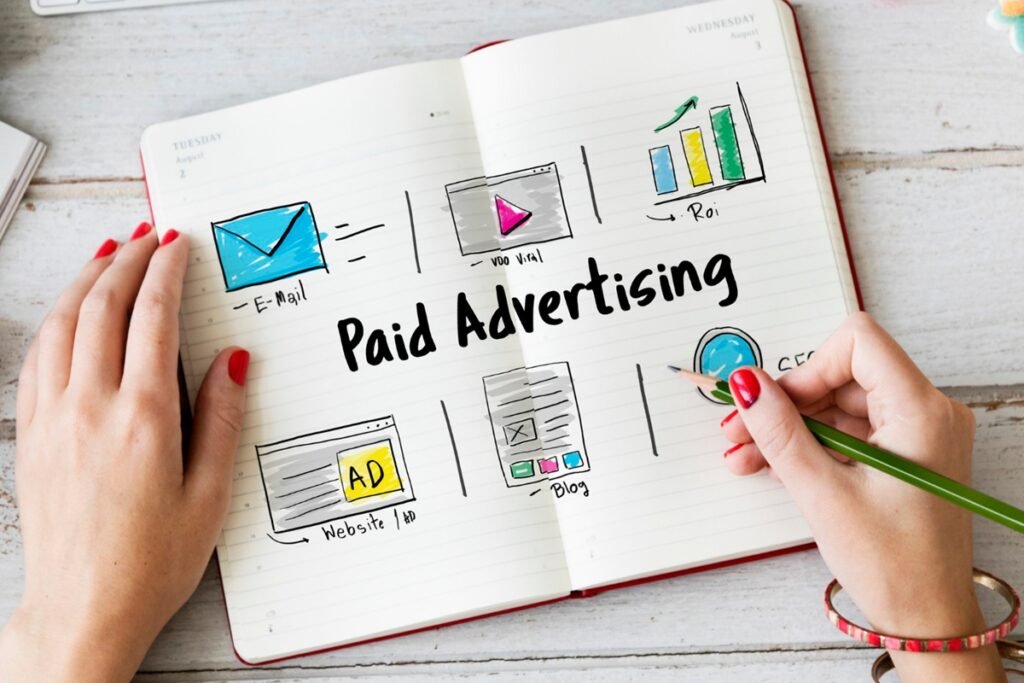
You’ve probably seen it happen. A business invests thousands of rupees in social media campaigns. It creates beautiful content and maintains an active online presence. Yet the phone doesn’t ring as often as expected. Website traffic crawls at a snail’s pace. Conversions stay disappointingly low. This frustrating scenario plays out across India every day, leaving business owners wondering where they went wrong with their digital marketing services..
The truth is, many businesses focus heavily on organic social media and content marketing while overlooking a critical component of digital success. They build their online presence on platforms where their audience might discover them eventually. However, they miss the opportunity to appear when potential customers are actively searching for their products or services. This missing piece is search engine marketing. Without it, your digital strategy is like a shop with gorgeous displays but no sign on the main road.
Search engine marketing bridges the gap between your business and customers who are ready to buy right now. While organic strategies build momentum over months, SEM places you at the top of search results immediately. When integrated properly with other digital marketing services, it creates a comprehensive approach that captures demand at every stage of the customer journey.
What Search Engine Marketing Is and How It Differs from SEO
Search engine marketing, commonly known as SEM, refers to paid advertising on search engines like Google and Bing. When someone searches for “plumber in Mumbai” or “best accounting software,” the sponsored results that appear at the top of the page are SEM ads. Businesses bid on keywords relevant to their offerings. Their ads appear when users search for those terms. You only pay when someone clicks on your ad, making it a performance-based investment.
The confusion between SEM and SEO is understandable, as both aim to increase visibility on search engines. However, SEO (Search Engine Optimisation) focuses on earning organic rankings through content quality, technical optimisation, and backlinks. It’s a long-term strategy that takes months to show results. SEM, on the other hand, delivers immediate visibility through paid placements. Think of SEO as planting seeds that will grow into trees, while SEM is buying flowers that bloom today.
Within the broader landscape of digital marketing services, SEM occupies a singular position. It complements several key strategies:
- Content marketing: Promotes your best content to targeted audiences.
- Social media efforts: Capture users who are actively searching for solutions.
- Lead generation: Accelerates results while your organic strategies gain traction.
- Market research: Provides immediate data about which keywords, messages, and offers resonate with your target audience.
The two primary platforms for SEM campaigns are Google Ads and Microsoft Advertising (formerly Bing Ads). Google dominates the Indian search market with over 95% market share, making Google Ads the main focus for most businesses. Microsoft Advertising, while smaller, offers lower competition and costs for certain industries. Both platforms offer sophisticated targeting options, enabling you to reach specific demographics, locations, devices, and times of day.
How Search Engine Marketing in India Has Transformed Business Growth
Search engine marketing in India has changed significantly over the past decade, driven by shifting consumer behaviour, rising digital competition, and the rapid growth of online businesses. What was once the domain of large corporations with sizeable budgets is now accessible to businesses of all sizes. Small retailers in tier-2 cities compete effectively with established brands by targeting local search queries. Service providers from Jaipur to Kochi use SEM to reach customers across state boundaries without opening physical branches.
Consider the story of a Bangalore-based interior design firm that struggled to differentiate itself in a crowded market. After incorporating search engine marketing in India into their digital marketing services mix, they began appearing for high-intent searches like “luxury home interior designer Bangalore” and “modular kitchen design near me.”
Within three months, their qualified lead volume increased by 240%. Their cost per acquisition dropped by 35% compared to relying solely on print or referrals.
The Indian market presents distinctive advantages for SEM strategies. With smartphone penetration growing rapidly and internet costs among the lowest globally, millions of Indians turn to search engines daily for everything from product research to immediate purchases. The diversity of languages, regional preferences, and local search behaviour creates opportunities to target highly focused audiences. A Mumbai restaurant targets “Gujarati thali near Andheri.” A Chennai coaching centre focuses on “NEET preparation classes Adyar.”
Cost-effectiveness is the most compelling advantage of search engine marketing in India compared to traditional advertising. A television commercial might cost lakhs of rupees with no guarantee of reaching interested buyers. A newspaper ad runs once and disappears. SEM campaigns start with budgets as low as ₹5,000 per month. They target only users actively searching for your offerings. They provide detailed performance metrics. You pause, adjust, or scale campaigns based on real-time results, something impossible with traditional media.
What Happens When You Skip SEM in Your Digital Marketing Strategy
Imagine your competitor launches a new product on Monday. By Tuesday afternoon, they’re at the top of search results for relevant keywords, capturing customers actively looking for that solution. Meanwhile, your business is still waiting for organic content to gain traction. Social media posts need to reach the right audience. Word-of-mouth needs to spread. This time-to-market disadvantage costs you market share in contested industries.
Without SEM, you face several critical disadvantages:
- Missed high-intent customers: You lose the opportunity to connect with buyers at the exact moment they’re ready to purchase.
- Restricted market testing: You cannot quickly validate demand for new services or products before investing heavily.
- Assumption-based decisions: You make strategic choices without data, increasing your risk of costly mistakes.
- Competitive disadvantage: Customers searching for your offerings will happily buy from competitors who appear in search results.
Benefits of Integrating SEM with Your Existing Digital Marketing Services
The real power of search engine marketing lies in integrating it with your existing digital marketing services as part of a unified strategy. While SEO builds long-term organic visibility, SEM delivers immediate traffic and conversions. This combination ensures you’re capturing demand today while investing in sustainable growth for tomorrow.
Your business doesn’t have to choose between immediate results and long-term strategy when you use both together.
SEM campaigns generate data that improves all your other marketing efforts. The keywords that drive conversions in your paid campaigns inform your content strategy. The ad copy with the highest click-through rate reveals messaging that resonates with your audience. The landing pages that convert paid traffic most effectively become templates for your organic pages. This intelligence loop makes every rupee spent on digital marketing services more effective.
The targeting capabilities of SEM are unmatched in precision and flexibility. You show separate ads to users in different cities, promoting region-specific offerings or addressing local concerns. You adjust bids to appear more prominently during business hours when your sales team is available to handle enquiries. You exclude audiences who’ve already converted or create special campaigns for previous customers. This control allows you to maximise relevance and minimise wasted ad spend.
SEM provides transparent, measurable ROI that justifies your marketing investment. You track how many clicks, leads, and sales each campaign generates while seeing the cost of each action. This accountability is refreshing in a marketing landscape where some channels offer vague metrics like “impressions” or “reach” without clear business outcomes. When stakeholders ask about marketing effectiveness, SEM data provides concrete answers. Start testing your initial campaign this week to see which keywords drive revenue for your business.
How SEM Complements Social Media Marketing
Social media excels at building awareness and engaging audiences who aren’t actively shopping. SEM captures users searching for solutions right now. Together, they address diverse stages of the customer journey. Your social media campaigns introduce your brand to potential customers. They create interest and build relationships. When those customers later search for products you offer, your SEM campaigns ensure you’re visible at that critical decision moment.
Data from SEM campaigns improves your social media targeting and creative strategy. If certain keywords drive strong conversions in search ads, those themes should inform your social content. If particular demographics convert well through paid search, you prioritise those audiences in social campaigns.
This cross-channel intelligence creates a more cohesive, effective digital marketing services approach that reinforces messaging across every customer touchpoint. Review top-performing search terms monthly to identify themes worth exploring on social platforms.
How SEM Enhances Content Marketing Efforts
Creating excellent content is only half the battle. Getting that content in front of the right audience is equally important. SEM lets you promote your best blog posts, guides, videos, and resources directly to users searching for related information. Someone searching “how to choose accounting software” is the perfect audience for your detailed comparison guide. Paid search puts that content directly in their path, accelerating discovery and establishing your authority.
Keyword research for SEM campaigns reveals what questions your target audience is asking and the language they use. These insights are gold for content marketing. If search volume is high for “difference between term and whole life insurance” but you haven’t addressed that topic, you’ve identified a content gap.
If users search “affordable wedding photographer Pune” more than “cheap wedding photographer Pune,” you’ve learned important vocabulary preferences. SEM research makes your content strategy more audience focused.
Use your search query reports to build a content calendar that matches genuine user intent.
What to Look for When Choosing SEM Services in India
Selecting the right search engine marketing partner in India requires careful evaluation. The most reliable indicator of competence is Google Ads certification. Google offers free training and certification exams demonstrating proficiency in campaign setup, optimisation, and analysis. Any agency or consultant handling your SEM should have current certifications. Case studies from businesses similar to yours provide evidence of relevant experience and results.
Ask potential partners defined questions about their approach. How will they structure your campaigns? What targeting strategies will they employ? How often will they optimise and report on performance? What conversion tracking will they implement? A competent SEM provider should explain their methodology clearly without jargon. They should discuss your business goals before tactics, ensuring campaigns align with what matters to your bottom line.
Several red flags should raise concerns when evaluating digital marketing service providers. Guarantees of exact rankings are impossible to honour honestly in paid search. Vague reporting suggests the provider is hiding poor performance. Reluctance to provide account access indicates cutting corners. Long-term contracts without performance clauses lock you in regardless of results.
Understanding pricing models helps you evaluate whether you’re getting fair value. Most SEM providers in India charge either a percentage of ad spend (typically 15-20%) or a flat monthly management fee. For smaller budgets with monthly ad spend under ₹ 50,000, flat fees often make more sense. For larger budgets, percentage-based pricing aligns the provider’s incentive with your growth. Regardless of the model, ensure you understand what’s included in management fees versus the actual ad spend that goes to Google or Bing. Request a detailed cost breakdown before signing any agreement.
How to Get Started with Search Engine Marketing Without Overwhelming Your Budget
The beauty of search engine marketing in India is that you start small and scale based on results. Begin with a focused campaign targeting your most profitable products or services in your primary geographic market using a budget of ₹10,000-20,000 per month. Prioritise high-intent keywords indicating immediate purchase readiness. Look for terms like “buy,” “near me,” “best,” “affordable,” and exact product names.
Set realistic expectations and key performance indicators. Understand that SEM typically takes 60-90 days to optimise fully. Define success metrics that matter to your business, including leads generated, sales completed, phone calls received, or form submissions. Monitor these consistently. The initial learning phase helps algorithms understand which users convert best for your business.
As your campaigns prove their value, scaling becomes the logical next step. Expand successful campaigns to additional geographic markets. Add new keyword themes targeting related products or services. Test various ad formats, such as responsive search ads, call ads, or shopping ads, depending on your offerings.
Data from your upfront campaigns guides expansion decisions, reducing risk and increasing the likelihood of continued success. This measured approach prevents budget waste while maximising the impact of your digital marketing services investment. Schedule a monthly review to identify your best-performing campaigns and allocate more budget to those winners.
Conclusion
Digital marketing services without search engine marketing are like a car with three wheels. You might move forward, but you’ll never reach your full potential or travel as smoothly as competitors with a complete approach. The businesses thriving in India’s digital economy aren’t choosing between SEO, social media, content marketing, and SEM. They’re integrating all these channels into a cohesive strategy that captures demand at every stage of the customer journey.
The accessibility and measurability of search engine marketing in India make it an essential component for businesses of any size. Whether you’re a local service provider wanting to dominate your city or an e-commerce brand seeking national reach, SEM provides the immediate visibility and precise targeting that other channels cannot match. The data and insights generated improve all your other marketing efforts, creating a positive feedback loop that amplifies your overall effectiveness.
Take an honest look at your current digital marketing strategy. Are you actively capturing customers who are searching for your solutions right now, or are you only hoping they’ll discover you through organic search? If SEM is missing from your mix, you’re leaving money on the table and giving competitors opportunities they understand. The good news is that getting started doesn’t require a massive budget or long-term commitment. Begin small, measure results, and scale what works. Contact a certified Google Ads specialist this week to discuss how SEM fills the gaps in your current strategy.